Service Details
Rank
Lieutenant
Branch
Navy
Years of Service
1966-1969
Decorations
Navy Wings of Gold, Air Medal, National Defense, Vietnam Service, and Vietnam Campaign medals
Pledge Class
1962
Their Story
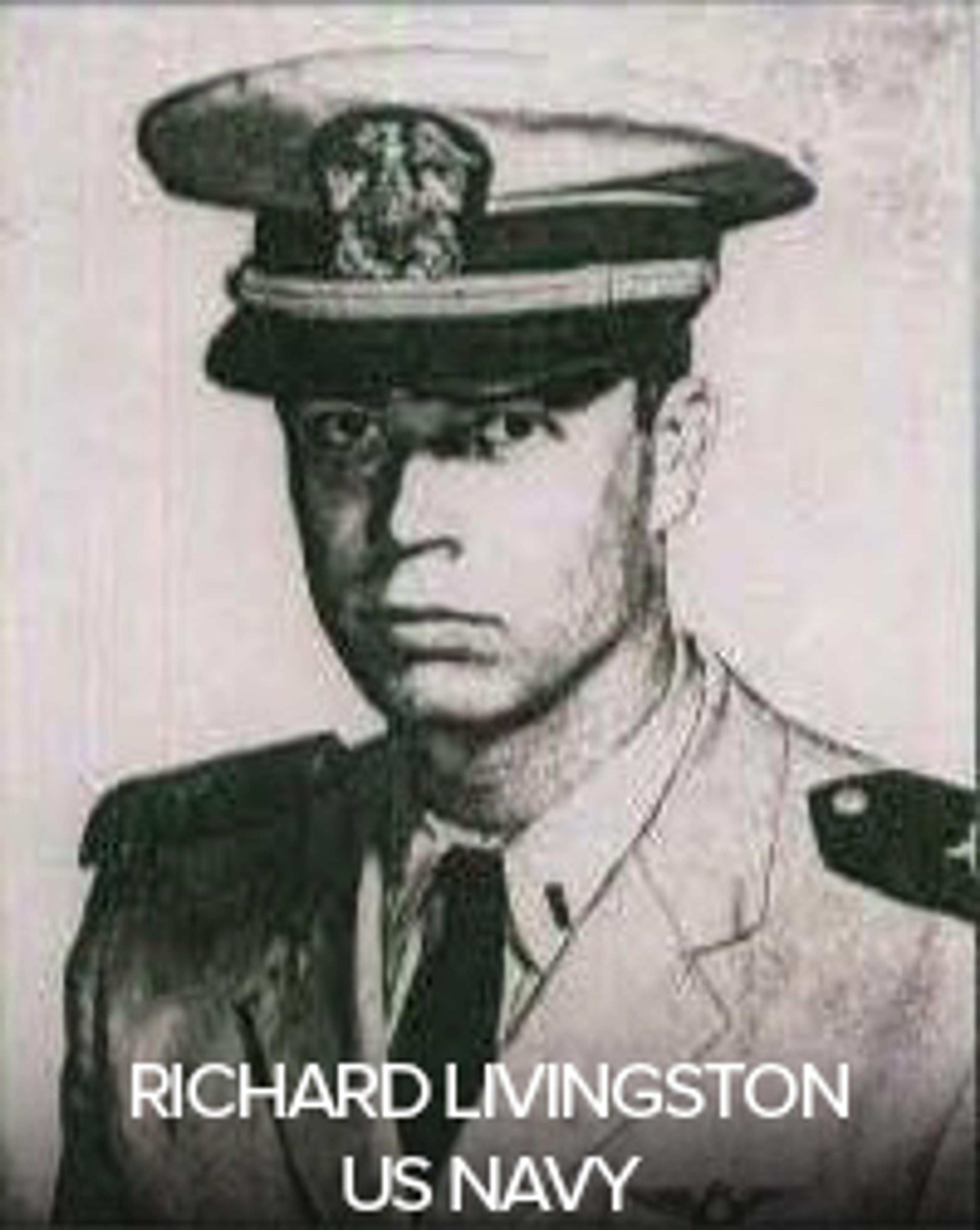
Richard Allen (Doc) Livingston was born to Jack and Winifred Livingston, July 1, 1944, the oldest of three children. He played center on the Tenino High School football team in Western Washington, graduated with honors and earned an NROTC scholarship to Idaho. He pledged in fall, 1962 and was initiated in winter, 1963. He tried out for Idaho football but quickly concluded that he was neither big or tough enough. Someone in the house who heard the "Doctor Livingstone, I presume," phrase, hung the nickname on him his first week in the house.
Doc worked in the kitchen as a hasher and at school concerts and athletic events. He waited tables and tended bar at the Moscow Elks Club. He was shy but shared his wicked sense of humor and political opinions with close friends. Leisure time was spent shooting baskets behind the house or playing pinball and listening to music at the Perch. In his senior year, in preparation for flight school, he learned to fly. He graduated with a B. S. In Geography in 1966, was commissioned a Navy Ensign and ordered to flight school in Pensacola. He completed primary training in the T-34 Mentor and basic training in the T-28 Trojan. He was ordered to the advanced propeller program in Corpus Christi, TX, flying the S-2F Tracker. He carrier-qualified and earned his Navy Wings of Gold in 1967.
Doc moved to North Island Naval Air Station in San Diego for training in the Grumman C-2A Greyhound. Upon completion and further carrier qualification, he was ordered in 1968 to Reserve Cargo Squadron 50 (VRC-50) which operated from NAS Atsugi, Japan and NAS Cubi Point, Philippines. Their mission in the C-2A was to supply parts, people and mail to the aircraft carriers in the Western Pacific.
On October 2, 1969, Doc was copilot on an early morning 800-mile flight from NAS Cubi Point to USS Constellation, operating at Yankee Station, about 70 miles off the Vietnam coast. They carried the mail and a full load of passengers. They reported into Marshall, the ship's control, and began their approach. Radar contact was lost at 0655, 10 miles behind Constellation. Debris indicated that the airplane entered the water at a steep angle. None of the 26 people aboard were ever found. The Navy grounded the entire C-2 fleet for a year. Cracks were found in propellers of other aircraft and cited as a possible cause. No hostile action was suspected. He was 25 and a Navy LT (O-3).
Doc was as good a roommate and friend as a person could ever have. He was bright, earthy, thoughtful and very well-informed. I was lucky to room with him, work and hang out in each stage of our education, flight training and later in San Diego. We traveled between Moscow and Western Washington to and from school twice a year, and drove from Pensacola to Seattle in three days for Christmas in 1966, showing none of the judgment the Navy was trying to teach us. I looked forward to seeing him during my upcoming cruise aboard USS Ranger. He died the day before we sailed.
Doc never married but had one serious relationship with a lovely woman in San Diego before he deployed. She treated him like a treasure. He described that period as the best time of his life.
I think of him often.
Patrick Noonan, Class of '66